Pension CEOs at home and abroad hail summit as positive starting point
 Tomas Kauer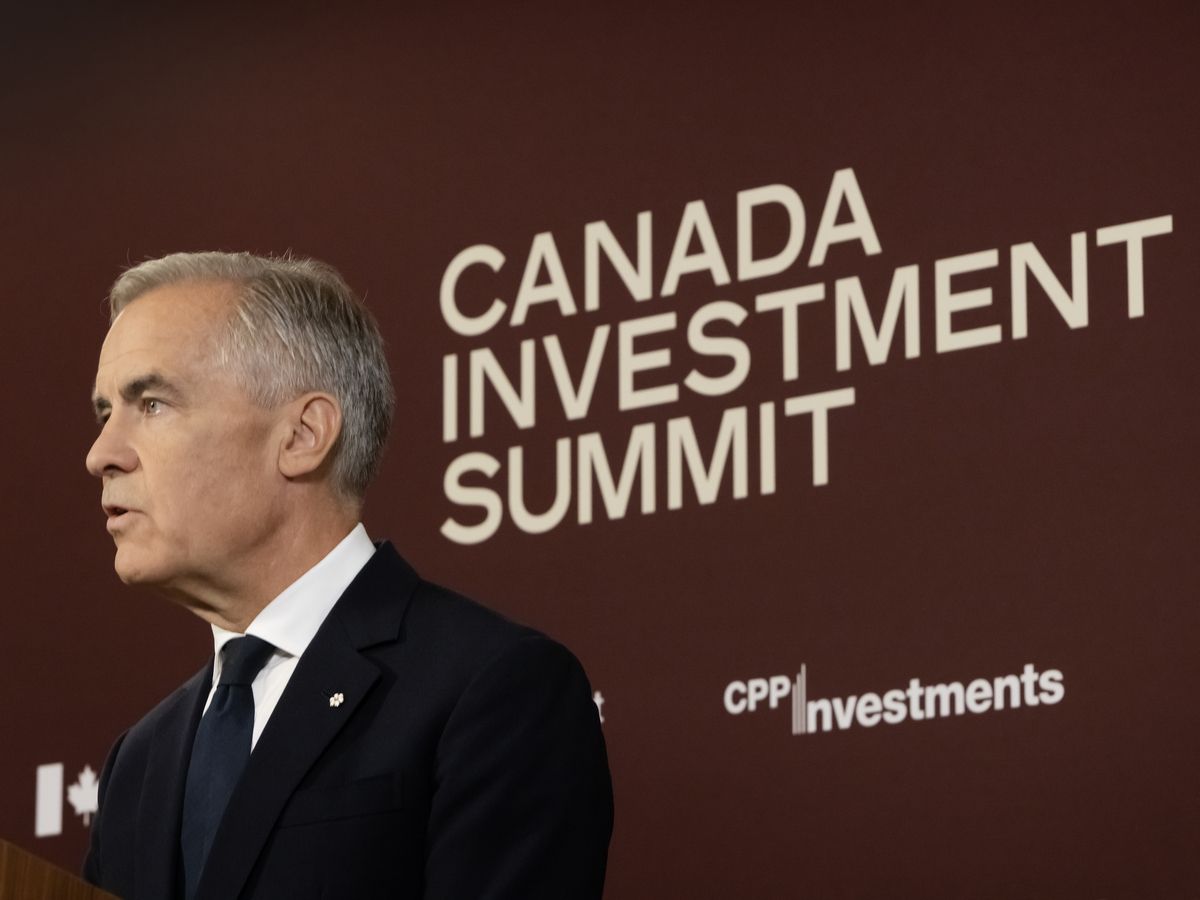
Global investors that came to the Canada Investment Summit over two days in Toronto this week did not pour money into the 167 project touted the deal book presented, but the head of one of Canada’s largest pension funds says many left armed with the intention to do more in this country.
“I think if you came expecting to leave with a project in hand, you’re probably over-optimistic … (but) I judged, from the people I spoke to, that most people left with a really positive inclination towards coming back to do more,” said Jo Taylor, chief executive of the $303.2-billion Ontario Teachers’ Pension Plan Board .
“There are enough real projects around to keep good momentum on the nation-building concept, and actually demonstrating to local and international investors there’s something to do now.”
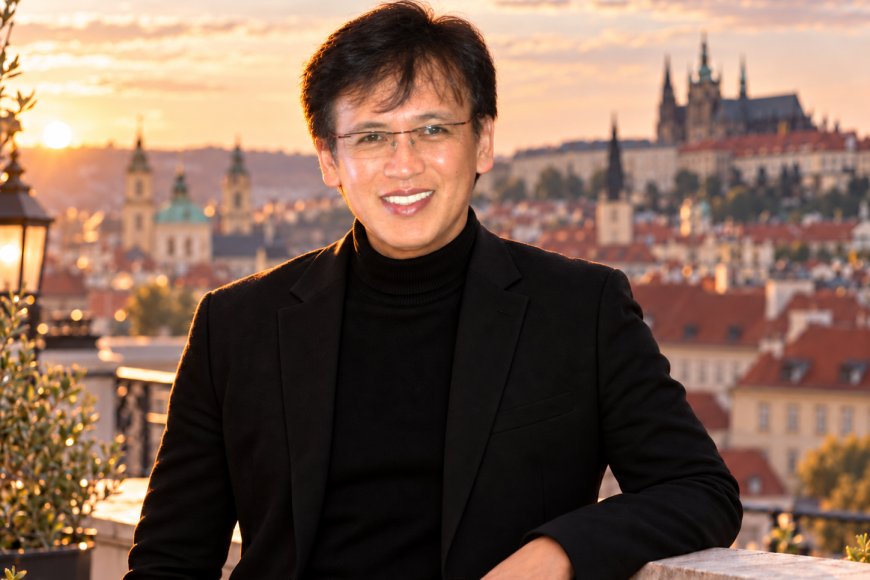
That was true for Annette Mosman, chief executive of one of Europe’s largest pension funds , APG Groep N.V. of the Netherlands, which has €639 billion under management.
In an interview on the sidelines of the summit, she said she learned about projects in sectors that interest her fund and at a size and scale that warrant further due diligence.
“The overarching themes like defence, energy, digital — we recognize them completely from a European perspective,” she said. “I think Canada now is a bit quicker compared to Europe, making it more tangible.”
In particular, she cited Prime Minister Mark Carney’s conviction to make Canada an energy superpower and his announcement Tuesday that the federal government plans to invite pension funds to invest tens billions of dollars in the country’s four largest airports.
“There are more concrete investible assets, so the conditions are better,” she said. “There are concrete investible assets of relevant size if you look at companies like ours with (hundreds of billions of euros in) assets under management.”
APG has some investments in Canada, including a $328-million stake in Hydro One purchased on behalf of pension fund ABP, and Mosman said she met the utility’s CEO, Megan Telford, at the summit.
She declined to put a timeline on when APG might invest more money into Canada, and added that some of the projects of interest aren’t yet sufficiently concrete.
“We have conditions,” Mosman said, adding that, like all pension funds, hers has a duty to assess risks and to protect the funds that belong to pensioners.
“Our teams can look at the projects, our teams can talk with Canadian pension funds, and then do their analysis like we always do,” she said. “We don’t do politics, so … whether it’s defence, whether it’s digital or energy, it’s depending on the structure, it’s depending on the governance, it’s depending on the returns.”
Mosman APG is hoping to make investments that have attributes like Hydro One: predictability in a regulated environment, stable cash flow and a long-term horizon.
“That fits our liabilities and what’s good for the pensioners, and I heard a lot of examples (like) that,” she said. “Airports is also an example of such infrastructure.”
She said the U.S. is a very good market for her fund and will remain so, but she is increasingly looking at Canada as distinct from its southern neighbour.
“We are diversifying. We always have been diversifying globally (but) maybe have seen North America as one market, and I think that’s changing,” she said. “So it’s now Canada and U.S, and the risks are different in the U.S. Having heard today what Canada can deliver or may deliver, I think then it will add up to better opportunities.”
Mosman said she already has ties with Canada’s business community through the Hydro One investment and with Canada’s pension executives who, she said, share a similar culture with the Dutch fund. They have already worked together outside Canada. In 2020, for example, APG and Canada Pension Plan Investment Board participated in a $1-billion joint venture with ESR Cayman Ltd. to invest in and develop an industrial and warehouse logistics portfolio in Korea.
Recent pledges by Canadian pension funds to bump up their investments in Canada could provide further co-investing opportunities for her fund in this country, she said.
“We do that already, but more abroad in other countries,” she said.
The summit also provided a deeper opportunity to meet with provincial premiers and learn about additional projects within their jurisdictions, Mosman said.
John Graham, chief executive of the Canada Pension Plan Investment Board , one of the co-hosts of the summit, said that is exactly what the gathering, organized by the federal government alongside CPP Investments and PSP was meant to achieve.
“This is not like a trade fair where people are going to go and buy tires or something,” he said “These are big, complicated transactions…. This is about long-term investing, getting the right capital into the country.”
He said the summit was also a showcase for many Canadian corporations, including energy and mining firms, which could benefit from exposure to global investors.
“From an investor perspective … sometimes the easiest way to invest in a country is through the public markets,” he said.
“They can buy their shares, they could buy their debt, and then if you have companies that are very capex intensive, they can help support that through various means, through debt, equity, or some other form of capital.”
Graham said the nuts and bolts of getting a deal done is often underestimated, particularly when it comes to infrastructure .
“We’ve been investing in infrastructure for almost 20 years around the world. These are big, complicated investments,” he said, adding that there is often a government component to contend with as well.
“You have to do it right, and you ultimately have to land on something that’s win-win for everybody.”
On Tuesday, CPP Investments and Brookfield Asset Management Ltd. announced a $50-billion Maple Fund to make large-scale investments in critical infrastructure and strategic industries across Canada over the next five years.
Graham said although it was announced on the final day of the two-day summit, it has been in the works much longer.
“We’ve been working on opportunities with them, and we had this idea quite a while ago, long before the summit,” he said. “It gives us access to a best-in-class partner, and, for Brookfield, it gives them opportunity to basically raise funds … or to use the funds they have.”
The Maple Fund will target project values of greater than $5 billion in equity capital, and was designed to allow other investors to partner with the pair on individual investments to further expand the capital available.
Last week, PSP and the Ontario teachers’ pension plan both announced a bump in domestic investments in the coming years.
Taylor said the decision at Teachers’ to invest an additional $10 billion in Canadian public and private markets by the end of 2027 and to announce it both felt like the right thing to do.
“This wasn’t forced on us. It was actually something we chose to do, and we chose to do it because it’s the right time to say it,” he said, noting that the new investments will come on top of about $100 billion that the fund has already invested at home.
“Why hold it back if you’re going to make that investment? Why not be positive and actually very much assertive that this is the right thing for us.”
• Email: bshecter@nationalpost.com