Fed policymakers rally around the 'price stability flag' in rate hike
 Tomas Kauer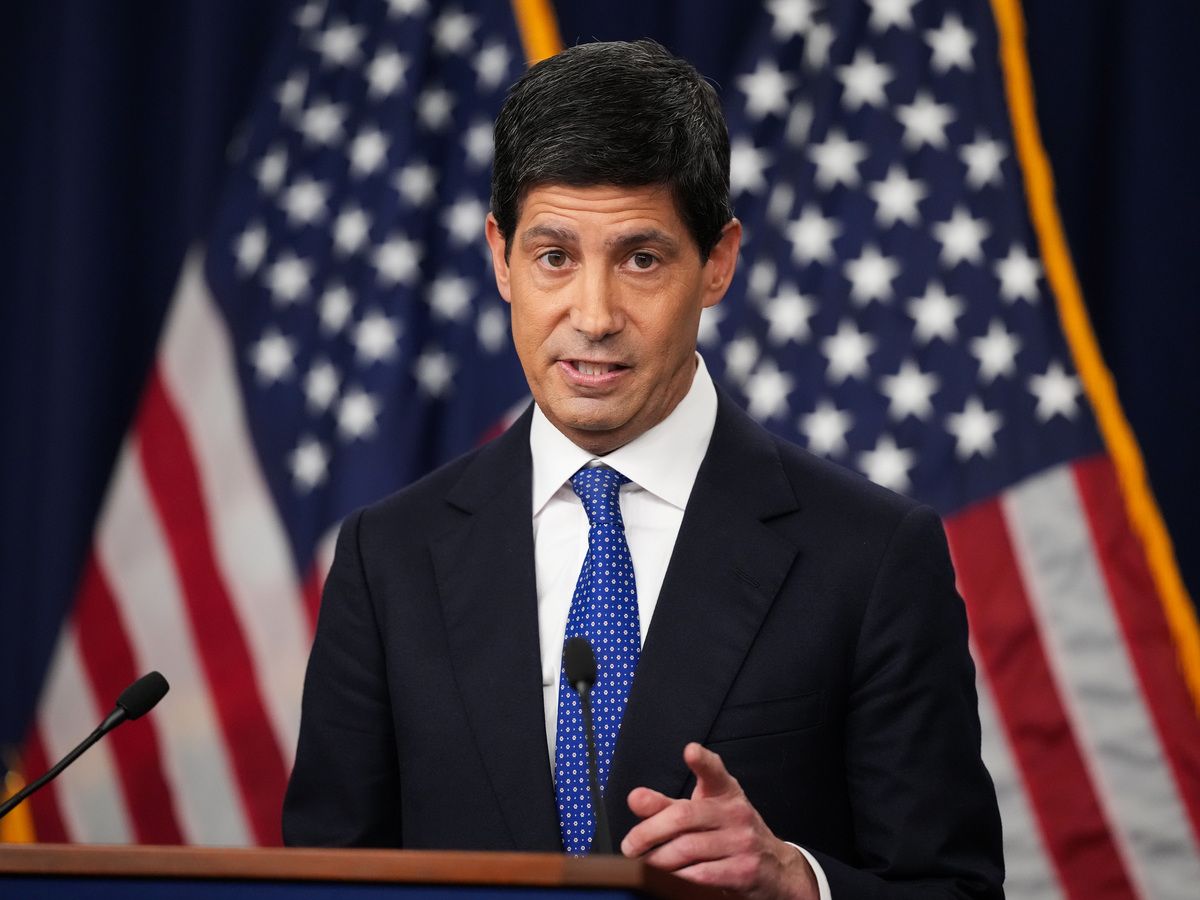
The U.S. Federal Reserve has done what markets overwhelmingly expected (and President Donald Trump vehemently opposed) and raised its policy interest rate to a target range of 3.75 per cent to four per cent — its first hike in three years — as inflation remains stubbornly above the central bank’s two per cent target.
“The plain fact is that inflation is too high and has been for too long,” Fed chair Kevin Warsh said at an afternoon press conference. “This summer’s inflation readings do not tell me that underlying trends have meaningfully improved.”
Here’s what three economists had to say about the Fed’s decision and the outlook for future rate hikes.
Fed signals ‘more tightening ahead’: TD
In a note, TD Economics director and senior economist Thomas Feltmate said the Fed’s decision was widely anticipated amid higher oil prices and August’s hotter-than-expected inflation, which came in at 3.4 per cent.
“Holding rates steady risked undermining the Fed’s commitment to returning price stability, potentially pushing longer-term Treasury yields even higher,” he said. “Instead, the rate hike and hawkish shift in the dot plot provided some reassurance to market participants, leading to a modest flattening in the yield curve.”
The question now is how many more rate hikes are on the table. Feltmate said a “one and done” approach would be “inconsequential” for both economic growth and fighting inflation.
“But we would also argue that current Fed futures pricing of nearly three additional hikes over the next year is overstated,” he said. “Delivering on one more quarter-point hike at its next meeting would largely undo last year’s insurance cuts and move the policy stance into a slightly more restrictive setting.”
Policymakers rally around ‘price stability flag’: BMO
The unanimous decision by the Federal Open Market Committee’s (FOMC) 12 voting members to raise its benchmark interest rate “once again reveals that when inflation is deemed to be problematic, policymakers, be they dove or hawk, tend to rally around the price stability flag,” said BMO Capital Markets managing director and deputy chief economist Michael Gregory in a note.
Gregory said that in the Fed’s quarterly economic forecast, the median projection for the target interest rate showed another 25 basis point hike by the end of 2026, a view shared by 12 out of 18 participants.
“Two were content with ‘one and done’ and four called for a total of 50 bps of tightening before year-end,” Gregory said.
In a speech last month in Wyoming, Warsh said the central bank will “have more work to do” if it is not confident that underlying inflation is moving toward its two per cent target “clearly and at sufficient speed.”
“Policymakers clearly lacked that confidence today and the consequent ‘work’ has begun with probably more to come,” Gregory said. “We still expect another quarter-point action by December.”
Inflation still ‘top of mind’: CIBC
“The unanimous vote suggests that inflation is still top of mind for all FOMC members and with oil prices still above $100 per barrel, that raises the risk of spillovers into core inflation or inflation expectations,” CIBC Capital Markets economist Helen Lao said in a note.
CIBC forecasts the Fed will raise its policy rate by another 25 basis points at its next announcement on Oct. 28.
“Much will hinge on development (in) the Middle East conflict and future inflation data,” Lao said. “We have two cuts penciled in in the second half of 2027 assuming that the conflict is resolved and oil prices decline back down.”
Lao saids that beyond 2026, the Fed’s path remains uncertain based on policymakers’ views on the dot plot, the quarterly chart that shows where individual FOMC members think rates are going in the future.
“The dispersion of the dot plot remains wide, particularly in 2027, so dots aren’t really helpful beyond the next meeting or two given their dispersion,” she said.
• Email: jswitzer@postmedia.com