

























:quality(85):upscale()/2026/03/16/901/n/1922398/7098afdb69b86a52587585.46389067_.jpg)
:quality(85):upscale()/2025/08/14/650/n/1922283/470aeb83689df49cdc1bb6.14084110_.jpg)
:quality(85):upscale()/2023/10/03/668/n/1922283/1f15c8a9651c2d209e5eb5.32783075_.jpg)

:quality(85):upscale()/2023/09/18/918/n/1922398/a1136b676508baddc752f5.20098216_.jpg)

Countries must move beyond seeing AI as a race, where one side must beat the other


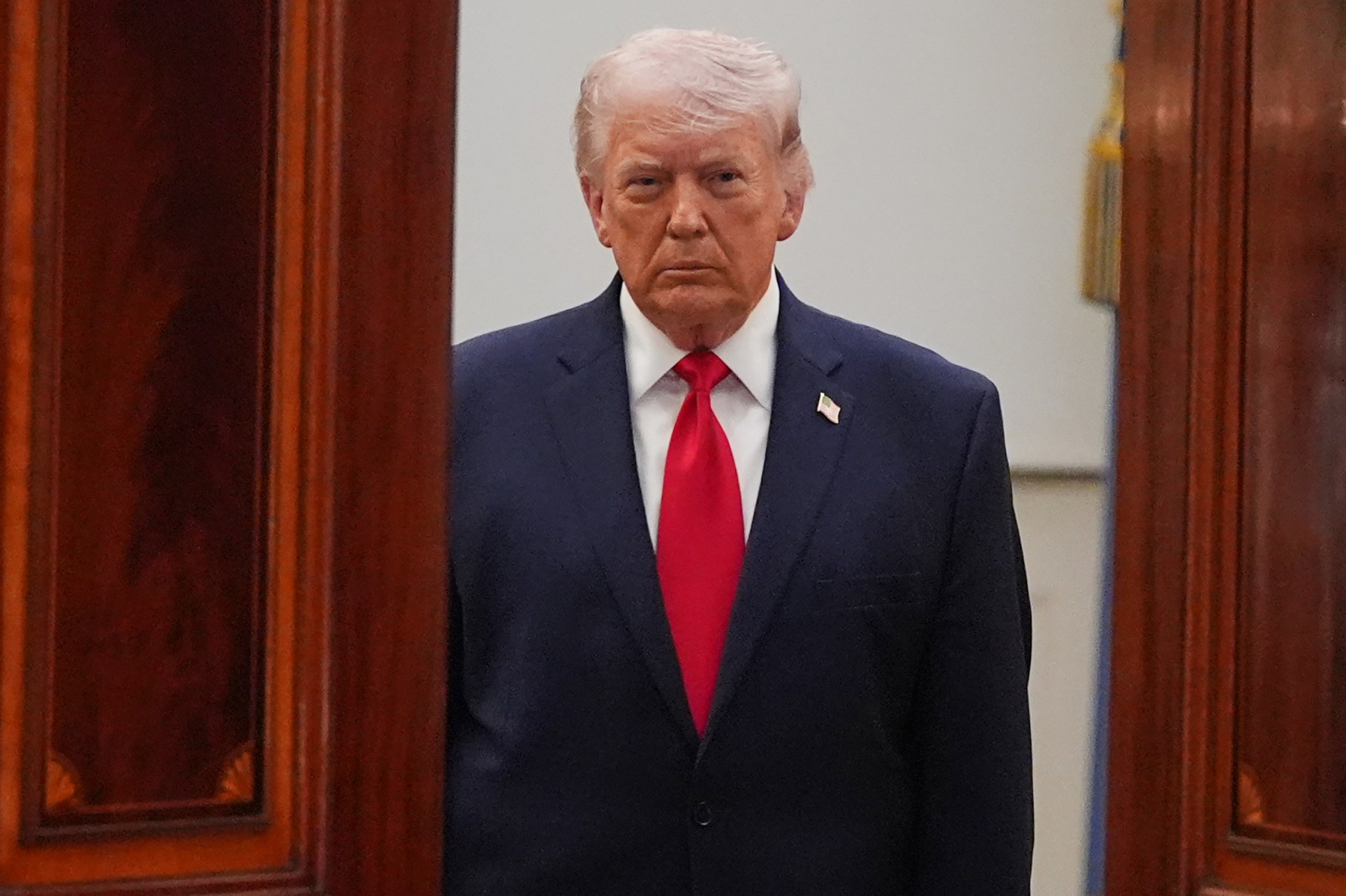
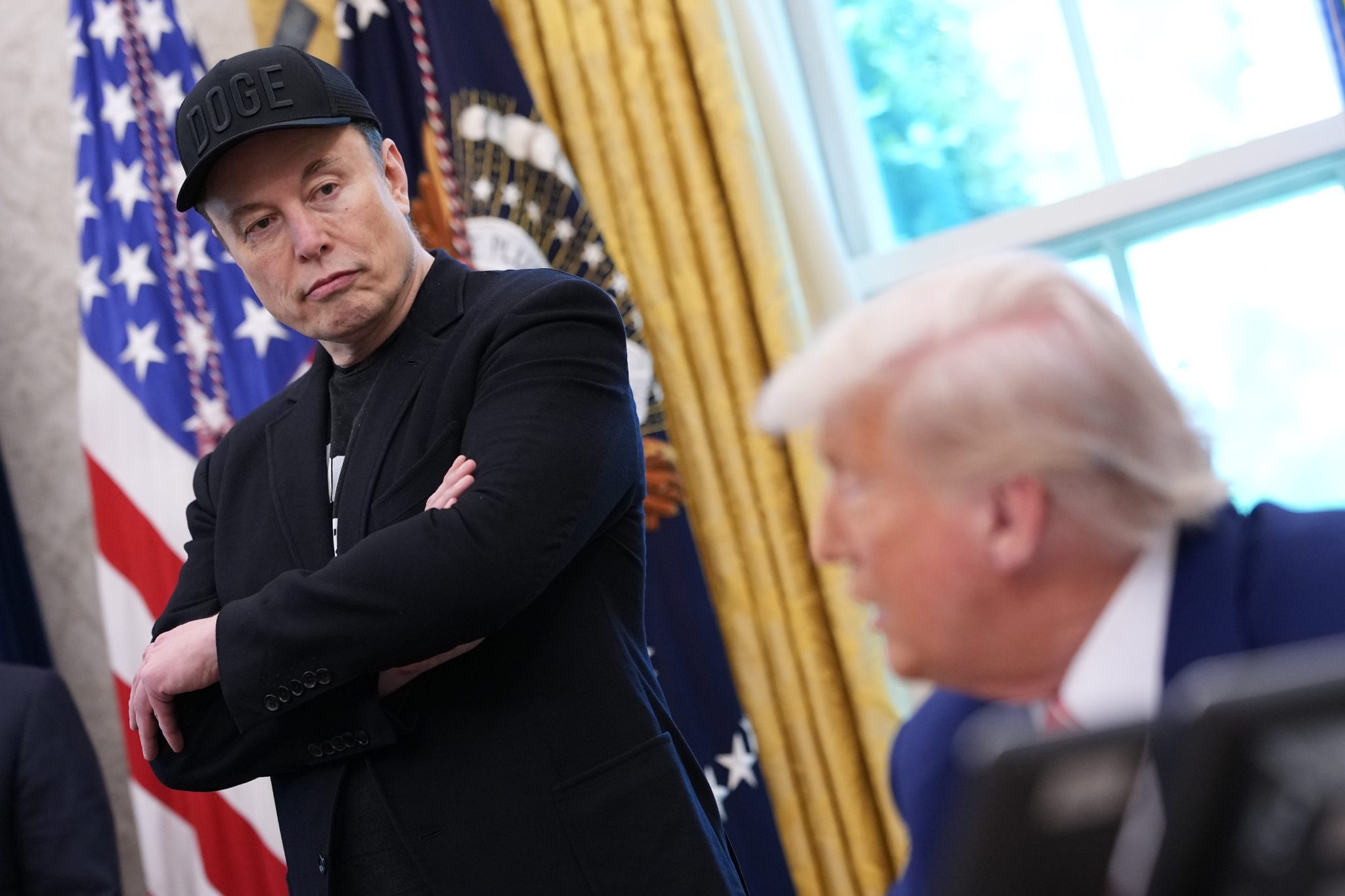
On Dec. 9th, U.S. President Donald Trump announced that the U.S. would allow Nvidia’s H200 processors to be exported to China, subject to a 25% fee on all sales. The move has sent ripples through the American establishment, with many (including Senator Elizabeth Warren) charging that Trump is “selling out” national security.
There is no shortage of such zero-sum or competitive framing when it comes to the global AI space. Indeed, while Anthropic has emphasized AI safety at home, the company’s co-founder and CEO, Dario Amodei, has stoked a narrative of an arms race abroad, arguing that export controls are essential to slow down China’s development and ensure that the U.S. wins the AI race. Similarly, Chip War author Chris Miller argues that the U.S. chip export controls, such as the prohibition on the sale to China of the most advanced GPUs like the NVIDIA H100s, have “succeeded … [by] significantly slow[ing] the growth of China’s chipmaking capability”. Indeed, Trump himself declared in July that America started the AI race, and it will win it.
Such arguments suggest that the two great powers are engaged in a two-player race—that one of them will win and the other will lose—and that the winner will obtain significant benefits at the expense of the loser. Yet from a rational choice perspective, the “AI race” is a misnomer. A two-party race typically involves an environment characterized by a rivalrous resource (which cannot be enjoyed by both parties) that is non-excludable (neither player can easily prevent the other from using it), and the players compete over who will be the first to that resource.
In the 1955 film, Rebel Without a Cause, Jim Stark (James Dean) races toward a cliff against his nemesis Buzz (Corey Allen). If both teenagers drive straight, they both die. The one who swerves first loses. If one driver swerves and the other continues racing to the cliff’s edge, neither can improve his position by changing strategy—we call this a Nash Equilibrium. This outcome is non-cooperative: If one swerves, the other should race; but if one switches to racing, the other should swerve.
The geopolitical AI ecosystem is not like this. The use of AI models is excludable—indeed, last year Sam Altman decided to exclude Chinese users from OpenAI’s GPT—but such use is not strictly rivalrous (DeepSeek’s models are released under open-source licenses and can be run locally by anyone). A model’s implementations are arguably rivalrous, in that the marginal user imposes an energy/data cost, but that was not the motivating concern for Altman’s decision: He excluded Chinese users because he believed that the U.S. should not cooperate with China.
So perhaps the argument is that selling chips to China would embolden Beijing and render the U.S. worse off. Yet this ignores the benefits accrued to ordinary U.S. middle-class households through greater access to leading electronics at lower prices, or the volume of leverage afforded through global dependence on the American tech landscape.
Some economists refer to a situation characterized by non-rivalrous but excludable resources, instead of rivalrous but non-excludable resources, as a “stag hunt”, drawing upon a parable in philosopher Jean-Jacques Rousseau’s A Discourse on Inequality. Consider a group of hunters who can choose to hunt a large prey together (the stag), or a small prey alone (the rabbit). The trick is that they can only catch the stag if they cooperate while everyone can hunt a rabbit on their own. This game has two Nash equilibria: Either we work together to hunt the stag, or we each work alone to catch a single rabbit. Yet one of these equilibria is better than the other: We should work together to hunt the stag.
Global AI competition looks more like a stag hunt than it does like a race. Whether in policy, governance, or trade, cooperation between countries can yield greater benefits than working alone. In contrast, a breakdown in communication breeds mistrust, which could give rise to harmful mistakes, such as an escalatory spiral from overestimating the threat posed by the other side, or a reckless deployment of AI in conflicts. The “stag” in the U.S.-China AI game, therefore, lies in part with the mutual prevention of such mistakes and the gains from mutually advantageous commercial development of AI for the benefit of the wider public.
There exist plenty of common challenges that China, the U.S., and the world must confront, from AI manipulation, deception, and coercion, to the displacement of labor brought about by AI’s implementation in the workforce. Such mutually beneficial cooperation requires trust, transparency, and cooperation, as opposed to erratic politicization—this is how we move from hunting the rabbit, to hunting the stag.
To get there, policymakers must seek to cultivate effective multilateral AI governance institutions, including establishing and monitoring dispute resolution mechanisms. Bargaining capital also arises through unconventional alignments of medium-size powers, each with their distinctive niches.
For instance, energy-rich Saudi Arabia is striving to become the third largest AI market in the world, while leading players in France and Israel are pledging to lead in specialized AI applications. With its immense population and growing emphasis upon education, India is shaping to be among the primary suppliers of engineering and computer science talent.
The international order is becoming more multi-polar, and the AI world is no exception. Instead of trying to “win the AI race” at any cost against its rival, both the U.S. and China should build bridges and seek common ground with friends and rivals alike.
This essay is adapted from the authors’ forthcoming book, Geopolitics of Artificial Intelligence, to be published in 2026 by Cambridge University Press as part of its Elements series.
The opinions expressed in Fortune.com commentary pieces are solely the views of their authors and do not necessarily reflect the opinions and beliefs of Fortune.
This story was originally featured on Fortune.com








:quality(85):upscale()/2025/10/09/670/n/1922283/00b944c868e7cf4f7b79b3.95741067_.jpg)