
The needless debate over infill vs. outfill housing development
 Tomas Kauer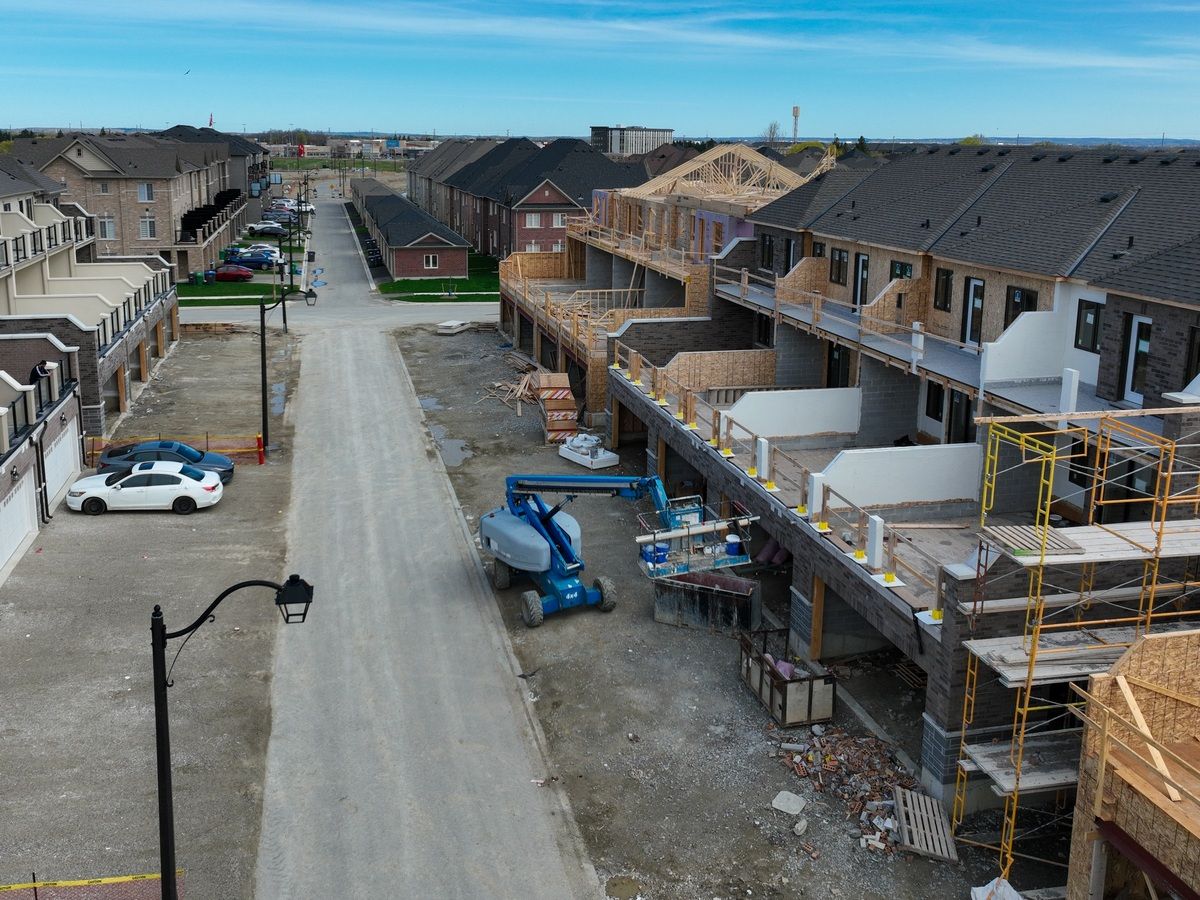
There is little doubt Canada needs more housing . Most advocates and experts agree on that point. Where disagreement lies is in how best to go about it and, in particular, whether to build in already-developed areas (infill) or in suburban regions with cheaper land (outfill).
In our view, this is a needless debate.
Analysis of Canadian demographics suggests Canada need not choose one development mode over another. Both infill and outfill are vital to meet the country’s diverse demographic needs, recognizing housing’s heterogeneity and the inappropriateness of a one-size-fits-all approach.
The infill camp is typically led by planning professionals guided by the conviction that increasing housing in developed areas fosters a more compact environment and, more importantly, utilizes surplus capacity in public transit and other infrastructural systems.
Critics of infill are usually long-standing residents of those areas who are apprehensive about multi-unit developments in their mostly single-family neighbourhoods. The disruption during construction, diverging demographics of incoming cohorts and the strain on traffic and parking are the most cited reasons for opposition. In rare instances, multi-family units are converted into rooming houses, which can indeed change the characteristics of a particular street or area.
One specific case of infill development near higher-order transit (such as rail-based or dedicated bus routes) has generally received greater approval within planning and construction circles . Extensive research over the years has supported new residential development in close proximity to transit stations and hubs, a concept widely recognized as transit-oriented development (ToD).
Recently released data and analysis by the Canadian Urban Institute (CUI) highlight the potential to build 4.4 million more dwellings near transit stations. According to their analysis, in cities with rail-based urban transit, only six per cent of the total land area lies within 800 metres of a transit station, yet 25 per cent of the 20.2 million urban residents with access to rail-based transit and 29 per cent of the dwellings were located in transit-proximity areas.
The concentration of employment near urban transit stations is significantly pronounced. Data from the CUI indicates that 47 per cent of the 7.9 million jobs in city’s with rail transit were located within an 800-metre radius of transit stations. Consequently, increasing housing density in the vicinity of transit stations will provide workers with enhanced opportunities to utilize transit or other sustainable modes of transportation.
Although the advantages of increasing infill development near transit stations are evident, these observations conceal the fundamental demographic disparities that may not be conducive to larger households with children.
Decades of research on ToDs and recent data from CUI reveal that housing near transit stations attracts smaller, younger households who prefer to rent. For the selected Canadian cities in the CUI data, those living near transit are 38 per cent more likely to be under 35 years of age, 30 per cent more likely to be university-educated, and 63 per cent more likely to live alone than those living farther away.
These demographics are characterized by the notable concentration of small-sized multi-family housing, which constitutes two-thirds of all residences in proximity to transit stations — as opposed to merely one-third in more distant areas. More than half of the residents near transit are tenants, compared to less than a third in other regions. And due to their comparatively younger demographic profile and a higher incidence of single-income households, their average incomes tend to be lower.
Transit-proximate communities exhibit self-selection bias, with those valuing density and proximity to transit choosing these areas. Increasing housing near transit will suit small households and renters but won’t address the needs of growing families seeking larger, owned homes.
The flight to the suburbs is driven by housing choices. Suburban housing is cheaper when normalized by occupied space. The neighbourhoods are home to long-term residents with similarly aged children who are likely to grow up together, attend the same schools and play on the same hockey rinks and soccer fields.
The housing and mobility preferences of family-oriented groups are reasonable considering their circumstances. Even their higher spending on transportation reflects their higher incomes and larger household sizes. The disparity in average transportation expenditure between suburban households in the Greater Toronto Area and those residing near transit stations is virtually eliminated when expenditures are adjusted for household size and income.
Public sector planners, economists, academics and most housing advocates agree that Canada must significantly increase the number of housing units beyond the standard projections over the next decade. A portion of the new residences are expected to be situated within infill developments near transit stations. However, this strategy alone not eliminate the need to construct millions of new homes for growing families in regions where land remains relatively inexpensive and plentiful.
Murtaza Haider is a professor and the Radhe Krishna Gupta Executive Chair in Cities and Communities at the Alberta School of Business. Stephen Moranis is an industry veteran and former president of the Toronto Real Estate Board.