
How Canada can lead the way in space
 Tomas Kauer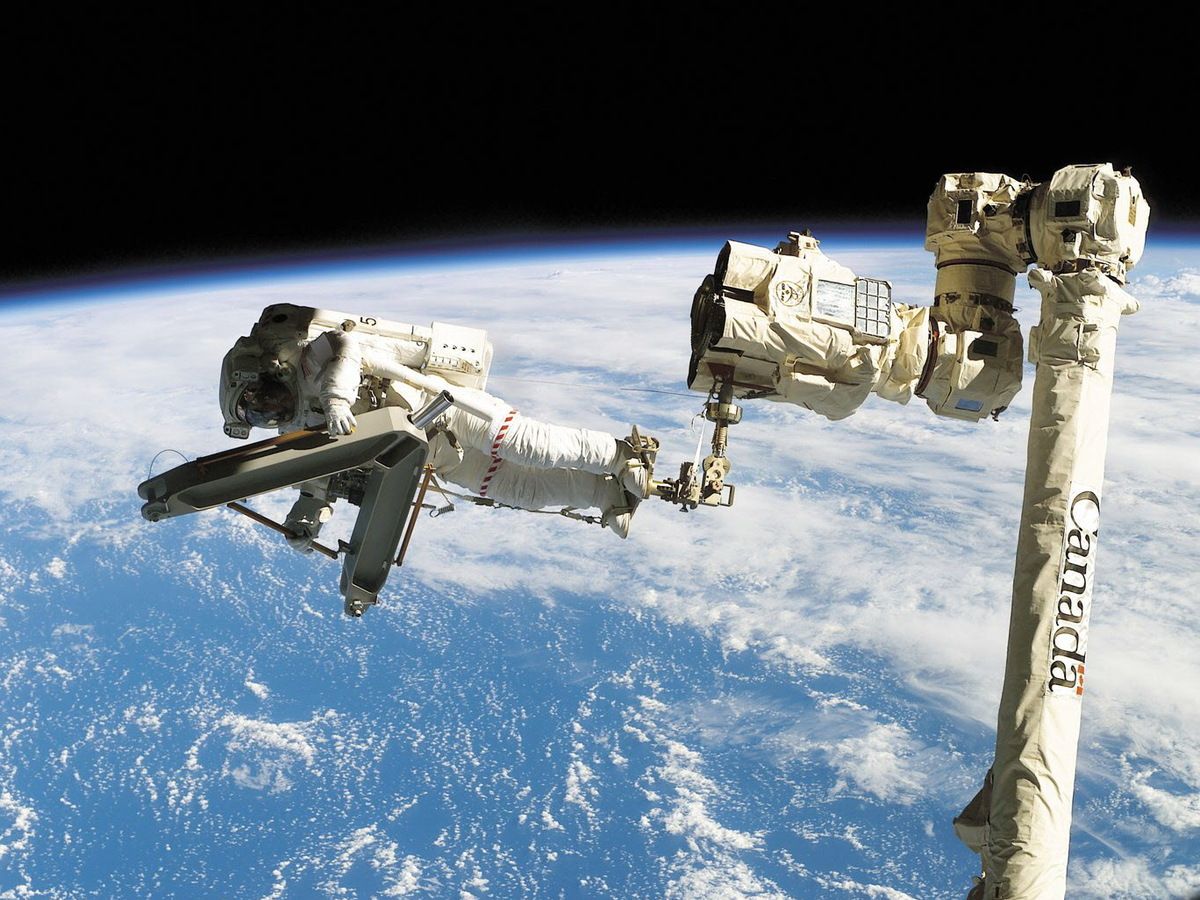
Canadians are well aware of many of the areas in which our country excels, but some may not realize that we are one of the world’s pioneering space nations.
Canada was the third country in the world to put a satellite into orbit , and our satellite systems have now connected Canadians for more than 50 years. Canadian robotic technologies have flown on more than 100 space shuttle missions and continue to support critical operations aboard the International Space Station, contributing to scientific discoveries that have benefited people around the world. And we have demonstrated our nation’s enduring commitment to space exploration and discovery by sending 10 Canadian astronauts on a total of 18 space missions over the years.
As the first international partner in NASA’s Artemis program, Canada has secured a seat at the table for the next era of lunar exploration. In April, as part of the Artemis II mission, Canadian astronaut Jeremy Hansen became the first Canadian — and first non-American — to travel beyond Earth’s orbit into deep space. Jeremy’s flight around the moon marked a historic milestone for our country, but our greatest opportunities still lie ahead of us.
Canada is already globally recognized for our expertise in multiple critical space technologies . We are leaders in Earth observation satellites that gather data about our planet’s surface, atmosphere, climate and oceans as well as in the ground systems and analytics capabilities that support them. These dual-use systems also provide vital intelligence, surveillance and reconnaissance for national security.
The country is also at the forefront of satellite communications with globally recognized companies that specialize in broadband satellite networks and direct-to-device communications, supported by a growing Canadian supply chain.
These are not niche technologies. They are foundational systems that will shape the global economy and security environment for decades to come.
Beyond satellite communication and sensing technologies, Canada has an opportunity to become a leader in next generation space infrastructure for low Earth orbit and to sustain a permanent human and industrial presence on the moon and beyond. From commercial space stations, nuclear-power generation, lunar rovers and robotics — there is an untapped world of economic opportunity that Canada can truly lead.
Entirely new industries will emerge and Canada has the technological expertise, engineering talent and entrepreneurial capacity to become a key architect of this future. As our country looks to not only invest in but to attract new capital to drive future economic prosperity, space offers numerous new critical infrastructure investment opportunities that take full advantage of all of these homegrown competitive strengths.
Canada’s leadership in mining, resource development and environmental stewardship could also translate into a leadership role beyond our planet. The moon and near-Earth asteroids contain valuable resources that could support future exploration and industrial activities. Canada’s expertise in mining engineering, remote operations, autonomous systems and resource extraction positions us to become a major contributor to the emerging fields of lunar and asteroid mining.
Similarly, Canada’s world-class medical and life sciences sectors could help solve some of the most important challenges associated with long-duration human spaceflight — know-how that will be directly relevant to expanding communities and military personnel in Canada’s far North as well.
While Canada has historically relied on international launch providers, this reliance is a vulnerability in the current geopolitical climate. Canada needs its own independent access to space —rockets built in Canada and launched from Canadian spaceports — to serve government and space industry needs. Having this capability will strengthen national security, improve economic competitiveness and create new opportunities for Canadian industry.
Our success in space will require more than technology alone. It will require a coordinated national strategy that aligns government, industry, academia and international partners around a common vision. And, importantly, it will require the support of the Canadian public.
The federal government’s new Defence Industrial Strategy is anchored on three principles: build in Canada where we can lead, partner where collaboration creates advantage and buy where it accelerates capability. This simple, clear framework will be effective in guiding defence investments , but needs to be applied equally to space development.
As Canada builds up its world-leading space capabilities , our country will be a sought-after partner to allies looking to share access to complementary technologies and expertise. This burden-sharing is the backbone of modern collective security, resilience and deterrence.
The coming decades will see space become one of the defining economic and strategic domains of the twenty-first century. Nations that invest today will shape the infrastructure, industries and institutions that govern humanity’s future beyond Earth.
Canada enters this new era from a position of strength. We possess world-class talent, innovative companies, leading academic institutions, trusted international partnerships and a proven track record of achievement in space.
We can build on our remarkable legacy as a pioneering space nation and become the anchor leader in this new frontier.
Mike Greenley is chief executive officer of MDA Space.