Bank of Canada holds interest rate at 2.25% for sixth meeting in a row
 Tomas Kauer
The Bank of Canada on Wednesday held its key interest rate at 2.25 per cent for the sixth consecutive time despite uncertainty over trade relations with the United States and the ongoing conflict in the Middle East.
The central bank’s last move was in October 2025, when it cut the overnight rate by 25 basis points.
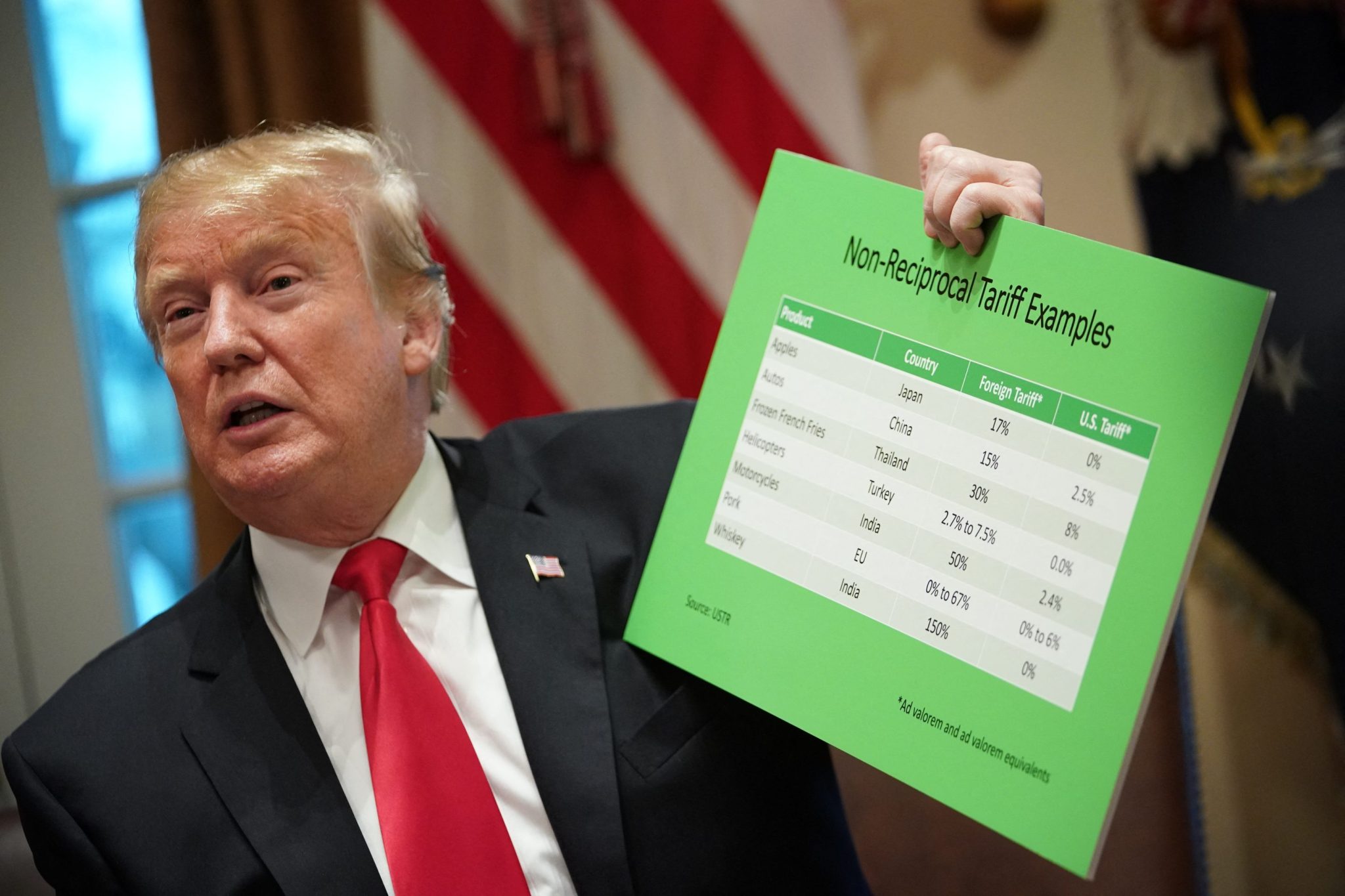
Its decision to hold comes after the U.S. declined to renew the Canada-U.S.-Mexico Agreement (CUSMA) for another 16 years, triggering a rolling annual review for up to a decade, and the interim peace agreement between the U.S. and Iran appears to be in peril amid strikes from both sides.
Though the central bank’s statement notably removed mention of the potential for consecutive rate hikes, Bank of Canada governor Tiff Macklem said this scenario still exists if oil prices remain high and impact the prices of other goods and services.
“Uncertainty is high, and we’re prepared to adjust monetary policy as needed,” he said at a press conference, adding that the base case is still for oil prices and inflation to gradually ease.
Policymakers said Canada’s economy is showing signs of improvement, growth is picking up and inflation is projected to gradually ease from its recent spike.
“Although the Canada-U.S.-Mexico Agreement is now subject to annual reviews, more businesses report they are finding ways to navigate through the uncertainty,” they said in a statement. “Government spending also contributes to higher economic activity over the projection.”
Headline inflation rose to 3.2 per cent in May, largely driven by higher gas prices amid supply uncertainty, though core inflation was at 2.2 per cent.
Policymakers anticipate the next consumer price index (CPI) release will show inflation remained high in June, but will gradually fall to two per cent by early 2027, “although this forecast is dependent on the path for oil and gasoline prices.”
“I do want to underline that this forecast is highly dependent on the path for global oil prices and gasoline prices,” Macklem said, adding that Bank of Canad’s forecast was finalized on Friday before oil futures moved higher.
“We’ve been looking through the direct effects of higher oil prices on inflation, but the longer they remain elevated, the bigger the risk they spill over to other goods and services.”
But policymakers said there are “clear signs” economic growth has resumed in the second quarter, with gross domestic product estimated to have grown by 2.5 per cent. Solid consumer spending, potentially stabilizing housing activity, export growth and a projected increase in business investment — due to a boost from the oil and gas sector — contributed to their forecast.
The Bank of Canada predicts GDP growth of 0.7 per cent in 2026, followed by 1.8 per cent growth in both 2027 and 2028.
Frances Donald, chief economist at Royal Bank of Canada, said policymakers are managing the tension of two opposing risks: the potential for oil prices to spread into other goods and services and the possibility of slackening business investment and consumer spending.
“But the Bank of Canada is becoming more comfortable with its central base case,” she said, adding that policymakers held rates because they believe it to be the best policy stance, unlike in April when they held rates due to a lack of clarity. “That is to say that even though risks are still present, the extreme nature of those risks is declining.”
The price of oil is increasing inflation, but she said it no longer presents the material threat it did three months ago.
The uncertainty over CUSMA and a slowdown in business investment present deflationary risks, but these have softened, too. Business conditions have also improved despite labour market weakness at the beginning of the year.
“It’s not a gangbusters economy with significant growth,” she said. “It’s simply an improvement over the first half of the year.”
• Email: slouis@postmedia.com