How Canada’s first commercial spaceport is taking shape in Nova Scotia
 Tomas Kauer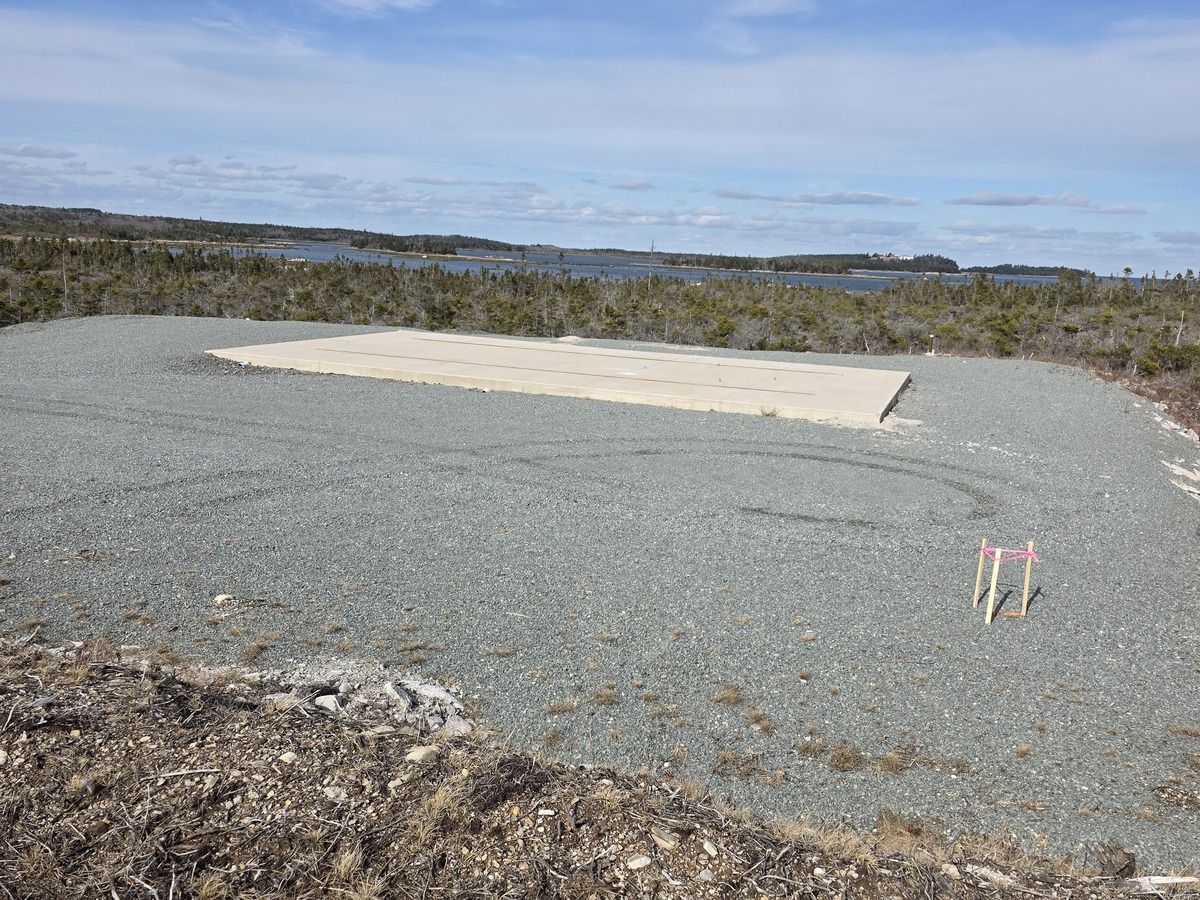
Canada’s push to build the country’s first commercial spaceport in rural Nova Scotia is moving from ambition to execution, backed by hundreds of millions in federal funding and infrastructure investment, but it faces criticism that early stage construction appears limited to a concrete slab and access roads.
Spaceport Nova Scotia, under development just outside Canso, will give Canada domestic orbital launch capability and support regional economic development while entering a global launch industry increasingly dominated by private companies. Canada currently relies on foreign launch sites in the United States and Europe to send satellites into orbit for communications, earth observation, navigation and defence purposes.
The company behind the project, Halifax-based Maritime Launch Services Inc. (MLS), said it is on track, though it is still in its early stages and must navigate technical, financial and market risks to become operational on schedule. Here’s what you need to know about Canada’s first commercial orbital launch facility.
What is Spaceport Nova Scotia?
Spaceport Nova Scotia is being developed with shared infrastructure for multiple rocket operators rather than a single integrated launch system.
The company originally planned the project around Ukraine’s Cyclone-4M rocket, but Russia’s 2022 invasion disrupted the program and accelerated a shift toward a more flexible, multi-customer launch model.
The project sits on a 335-acre coastal site leased from the Nova Scotia government under a 40-year agreement and is intended to support both commercial and government missions. Its permit allows up to eight launches a year, with plans to scale toward 50 annually.
Despite criticism that the site appears to be just a $200-million slab of concrete, the company said construction remains on track.
“It’s a meme,” Stephen Matier, founder and chief executive of MLS, said in dismissing the criticism. “It’s a clueless meme. People have really no understanding of what’s required.”
What’s being built on site?
In its early phase, the spaceport remains largely focused on foundational infrastructure. Planned facilities include a building for assembling rockets, payload processing clean rooms for satellites, a launch control centre for mission operations and fuel storage systems.
Matier said road expansion is continuing, fibre infrastructure is being extended to the site and utility planning is underway with Nova Scotia Power Inc. He said design work on major facilities is advancing, with tenders for the utility hub expected to come in the coming weeks, and construction is scheduled to be completed by the end of 2027.
He estimated remaining construction costs at roughly $60 million to $70 million, but the project remains fully funded with about 30 people currently employed on site.
Once fully operational, the facility is expected to support up to 80 permanent staff.
What’s happening behind the scenes?
The project is underpinned by a 10-year, $200-million federal lease agreement signed in March with MLS, under which the Department of National Defence will lease a dedicated launch pad at the site.
Under the agreement, Canada pays $20 million annually in rent, structured as a lump sum in the first year and quarterly payments thereafter. The contract also requires that at least 90 per cent of rental proceeds be spent in Canada or with Canadian-based businesses.
MLS is contractually required to develop, operate and maintain a working spaceport and keep it available for both government and commercial use. If those obligations are not met, the government retains the right to intervene, recover costs or terminate the agreement.
Why is Spaceport being built?
Matier said the global space economy could reach US $1 trillion annually by 2030, with current launch capacity already constrained, which is why demand for launch capacity is quickly growing, driven by satellite deployment.
“If you wanted to launch something with SpaceX today, you’re looking at a backlog of four to six years,” he said. “That’s not a healthy supply chain. That’s a bottleneck.”
A big question, however, is whether demand will scale quickly enough to justify the infrastructure investment required to build and operate a new spaceport.
Another variable is regulatory approval. Canada is still developing a federal framework for commercial orbital launches. Last month, Transport Minister Steven MacKinnon introduced the Canadian Space Launch Act (Bill C-28) to modernize rules for launches and re-entries.
The federal government said the legislation would support sovereign launch capabilities and help grow a domestic space industry it estimates could eventually be worth $40 billion.
Matier said he is confident the regulatory system will be in place in time for Spaceport’s planned orbital launch in 2028.
How will Spaceport work?
The project is built around what MLS calls an “airport model” for space: shared infrastructure such as roads, utilities, safety systems and launch coordination while private companies provide rockets and payloads.
Under this model, rockets launching from the site fall into two categories. Orbital rockets place satellites into continuous orbit around the Earth, while suborbital rockets briefly reach space before returning, typically for research and testing.
The spaceport is designed to have up to four launch pads, with companies leasing long-term access or bringing their own systems under varying arrangements. Matier said some future operations will be flexible as needed.
“Some clients are containerized systems,” he said. “They can show up and be ready to launch in 48 to 72 hours. Others could be long-term tenants building out for 10 years.”
Who is already onboard?
Germany-based Isar Aerospace SE and MLS on Tuesday said they have signed a letter of intent that could see Isar test and launch its rockets from the spaceport.
Last August, Longueuil, Que.-based Reaction Dynamics Lab Inc. signed a pathfinder launch agreement that calls for a first orbital launch from Spaceport in the third quarter of 2028, and it has invested $1.7 million in MLS. The company plans to use its Aurora rocket, which is still in development.
Glasgow-based Skyrora Ltd. and South Korea’s Innospace Co. Ltd. have also signed letters of intent to assess using the facility for launches.
Matier said MLS is in discussions with other potential clients, though he declined to name them.
“We have more clients than we have pads available,” he said.
Two successful suborbital launches have already taken place at the site. In one of them, Netherlands-based T-Minus Engineering BV launched a four-metre-tall Barracuda hypersonic test rocket in November, though it fell short of its target altitude. Two more small test launches are planned next month, followed by another in October.
• Email: arankin@postmedia.com